The United States on Tuesday vetoed an Arab-backed U.N. resolution demanding an immediate cease-fire in the Israel-Hamas war, the 13-1 Security Council further isolating the U.S. on Israel’s side in the conflict that has generated global outrage.
The U.S., which had warned it would veto the measure, has vetoed two similar resolutions since the war began. Britain abstained. Linda Thomas-Greenfield, U.S. ambassador to the U.N., said in a statement the U.S. has been working on a hostage deal that would bring at least a six-week period of calm and serve as the first step toward building a long-term solution to the crisis.
“Demanding an immediate, unconditional ceasefire without an agreement requiring Hamas to release the hostages will not bring about a durable peace,” she said.
U.S. National Security Council spokesperson John Kirby said the U.S. vetoed the resolution due to “very delicate” negotations now underway aimed at halting the violence and freeing more than 100 hostages held by militants in Gaza. Talks led by Egypt, Qatar and the U.S. that have been taking place on and off for months have thus far failed to generate a deal.
A draft U.S. resolution would call for a temporary cease-fire in Gaza contingent on all the hostages being freed, according to multiple media outlets including the Associated Press. The resolution would also urging Israel to abandon plans for invading Rafah, a southern Gaza city packed with refugees who have fled the violence elsewhere in the enclave.

US might press for temporary cease-fire:US pursues its own resolution for UN Security Council
Developments:
∎ Israel’s Knesset will vote Wednesday on a symbolic resolution affirming the government’s opposition to unilateral Palestinian statehood. Establishment of a Palestinian state would endanger the existence Israel, President Benjamin Netanyahu says.
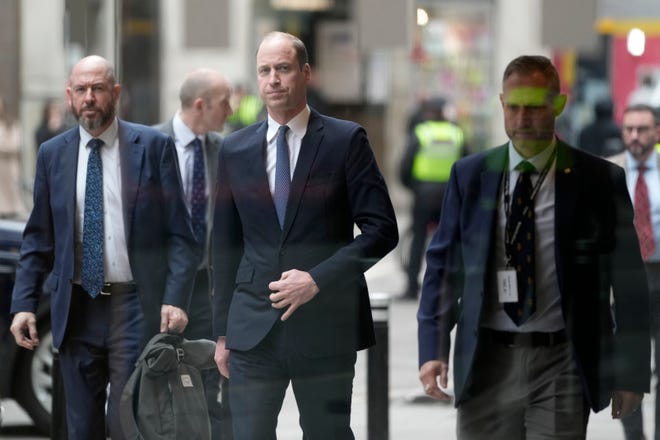
∎ Britain’s Prince William, visiting Red Cross headquarters in London, called for “an end to the fighting as soon as possible.”
∎ Even if a cease-fire halts the fighting, thousands more Gazans could die in the next six months because of the public health crisis the war has fueled, according to a report by independent researchers in the U.S. and Britain.

Clash with Houthi rebels is biggest US naval conflict since WWII
The Yemen-based Houthi militants that have attacked dozens of ships in the Middle East are formidable and have compelled the U.S. to engage in the its intense naval combat since World War II, a top U.S. military officials says. Vice Adm. Brad Cooper, deputy commander of U.S. Central Command, told CBS News that years of support from Iran have enabled the Houthis to launch the barrage of drones and missiles that have targeted at least 45 ships since November.
The Houthis say they are targeting ships tied to Israel and its Western supporters. The U.S. is leading a coaltion of more than a dozen nations aimed at stopping the attacks that have hampered shipping and fueled supply chain issues around the world. Egyptian President Abdel Fattah al-Sissi said this week that revenue from the Suez Canal have almost been cut in half since the start of the year as many cargo ships avoid the region.
“For a decade, the Iranians have been supplying the Houthis. They’ve been resupplying them. They’re resupplying them as we sit here right now, at sea,” Cooper said. “We know this is happening.”
‘High risk’ mission rescues critically ill from Gaza hospital
Over 30 critically ill or wounded patients have been transferred from southern Gaza’s besieged Nasser Medical Complex in two harrowing rescue missions despite nearby military battles and Israeli-mandated access restrictions, the World Health Organization said Tuesday.
The “high risk” rescues came as massive civilian casualties continue to sweep the enclave and medical care grows increasingly scarce amid the Israeli siege. Gaza officials say the death toll has surpassed 29,000, and tens of thousands more Palestinians are wounded.
“WHO fears for the safety and well-being of the patients and health workers remaining in the hospital and warns that further disruption to lifesaving care for the sick and injured would lead to more deaths,” the agency said in a statement.
WHO said the hospital became “nonfunctional” after a raid last week, when Israeli troops conducted a dramatic incursion, searching for the remains of hostages held by Hamas and pursuing its fighters.
An estimated 130 sick and injured patients and at least 15 doctors and nurses remain inside the hospital. The U.N. personnel and the Palestine Red Crescent Society who evaucated the 32 critical patients also shuttled limited supplies of essential medicines and food, WHO said in a statement. The patients were moved to the European Gaza Hospital in Khan Younis, Al-Aqsa hospital in central Gaza and field hospitals in Rafah.

Militants reportedly hoped to free hundreds of prisoners Oct. 7
Hamas was planning to storm Israel’s Ashkelon Central Prison and release hundreds of inmates as part of its assault on Israeli border communities Oct. 7, a British-based media outlet reported Tuesday. Asharq Al-Awsat, citing multiple sources in the Palestinian factions, said 23 members of an elite unit were selected for the mission, which failed when a guide led the team off course. The sources reported that the group set off toward Ashkelon, crossed the border and encountered resistance at Kibbutz Yad Mordechai.
The kibbutz has said its security force, aided by border police, prevented militants who descended on the kibbutz that day from from entering the compound. No casualties were reported.
Contributing: The Associated Press