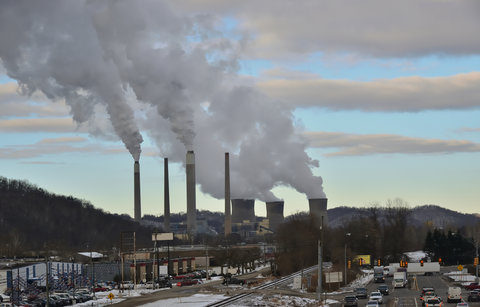
Bigger changes are urgently needed, however. “There’s a common narrative, especially in Congress, that the U.S. has cut emissions more than any other country. But that’s only true because our emissions were so high to start with,” Jackson said. On a per capita basis, U.S. emissions remain twice those of Europe and China, and eight times those of India.
Transportation is the largest source of emissions in the United States, and one of the most difficult to predict. “Three years after COVID first hit, we don’t know yet what the long-term effects on mass transit will be,” Jackson said. “Electric vehicles are starting to slow oil use a bit in the United States, but we remain far from net zero in the U.S. and globally.”
Although small compared to the emissions impact from fossil fuels and transportation, wildfires had an unusually large carbon footprint this year, with analysis of satellite records showing Canada’s emissions reached six to eight times the nation’s 20-year average due to an extreme wildfire season. Globally, fires contributed about 6 million tons of carbon dioxide during the first nine months of the year, 7-9% more than average.