Russia will station previously-banned long-range missiles close to Western countries if the U.S. goes through with its commitment to deploy several types of nuclear-capable missiles in Germany, Russian President Vladimir Putin has said.
Washington and Berlin announced earlier this month that the U.S. would start “episodic deployment” of long-range precision weapons in Germany from 2026 in a show of the U.S.’ commitment to NATO and European deterrence.
These weapons will eventually include SM-6 and Tomahawk cruise missiles, as well as “developmental hypersonic weapons, which have significantly longer range than current land-based fires in Europe,” the governments said in a statement.
Longer-range missiles, like SM-6 and Tomahawks, would have been prohibited under the 1987 Intermediate-Range Nuclear Forces (INF) Treaty, which banned nuclear and conventional missiles with ranges between just over 300 miles and around 3,400 miles.
Contributor/Getty Images
The U.S. formally pulled out of the INF Treaty in mid-2019 after accusing Russia of breaching the terms of the agreement, an accusation echoed by NATO but denied by Moscow. Both sides had suspended participation months earlier.
Russia said it would not resume manufacturing such missiles as long as the U.S. did not send its own abroad.
Earlier this year, the U.S. deployed what is known as the Mid-Range Capability missile system to the northern Philippines. The system fires SM-6 and Tomahawk missiles. Putin has previously said intermediate-range missiles had been used in Denmark for drills.
In late June, Putin said Moscow would restart production of these short- and intermediate-range, nuclear-capable missiles.
Kremlin spokesperson, Dmitry Peskov, said earlier this month that “all the attributes of the Cold War with the direct confrontation are returning.”
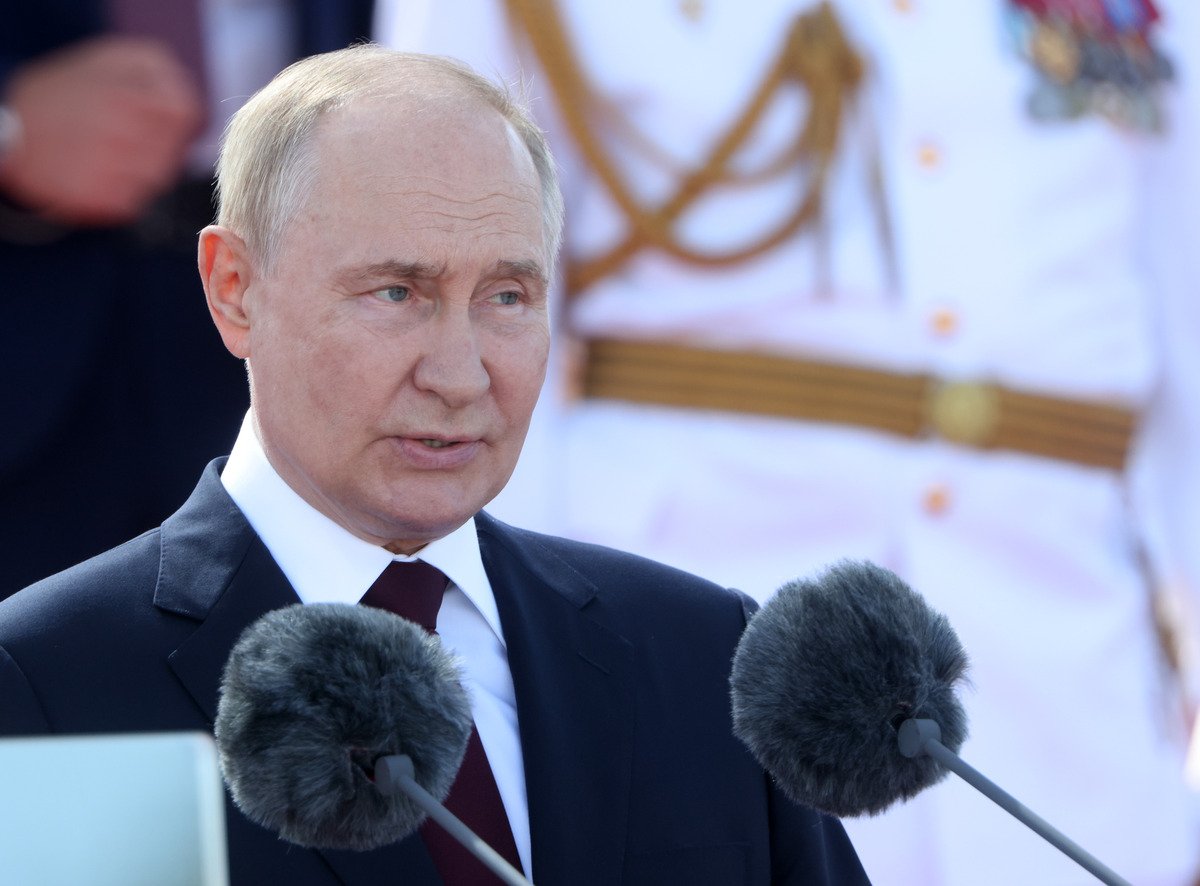
“If the United States carries through these plans, we will consider ourselves to be free from our unilateral moratorium on deploying intermediate- and shorter-range strike weapons, including measures to raise the capabilities of coastal defense troops of our Navy,” Putin said during a speech in the Russian city of St. Petersburg on Sunday, according to Russian state media.
Moscow is approaching the end of development of these type of missile systems, the Kremlin leader said. “We will take measures in kind to deploy them, taking into account the moves by the United States and its minions in Europe and other regions of the world.”
“This situation is reminiscent of the events of the Cold War period,” when the U.S. deployed Pershing II intermediate-range ballistic missiles in West Germany, Putin said.
The U.S. missiles that are set to be deployed in two years’ time would place Russian state and military command facilities, industrial centers and Moscow’s defense infrastructure in range of strikes, Putin said.
“The fly-in time of such missiles that can be eventually equipped with nuclear warheads will constitute about 10 minutes to reach targets on our territory.”
Uncommon Knowledge
Newsweek is committed to challenging conventional wisdom and finding connections in the search for common ground.
Newsweek is committed to challenging conventional wisdom and finding connections in the search for common ground.