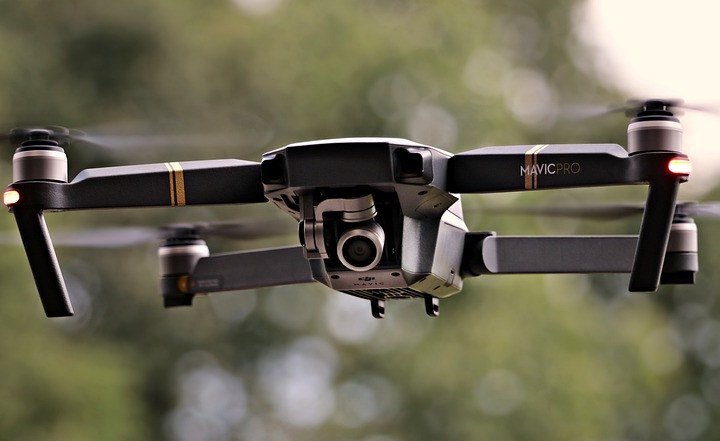
In a world grappling with malaria elimination, Rwanda became the first country in Africa to integrate and deploy drones in the most malaria-endemic zones of the country for an accelerated outcome.
In 2019, the government partnered with Charis Unmanned Aerial Solutions (UAS) to introduce an innovative approach to tackle the increasing malaria cases due to changes in Anopheles mosquito behaviors toward outdoor biting, and scaling-up of irrigation agriculture.
Eric Rutayisire, Founder and CEO of Charis UAS, explained that the firm collaborated with the Rwanda Biomedical Centre to develop a protocol on how to use drones and advanced 3D geospatial data, as an effective tool to tackle the rise of malaria cases in Africa.
The project’s success has led to its expansion in 2023, with Charis UAS scaling up its activities in Rugende and Kabuye, two communities heavily impacted by malaria. Drones are now being used to map mosquito breeding sites, allowing for targeted interventions.
Meanwhile, Kenya has rolled out a campaign using the world’s first vaccine against malaria to inoculate more than 400,000 children against the mosquito-borne disease. Health officials say malaria kills more than 12,000 Kenyans each year and more than half a million people in sub-Saharan Africa, most of them children.
Researchers in Tanzania have started using drones to identify mosquito breeding sites which are hard to reach and exterminate them by spraying insecticides. According to scientific findings, there are more than 300 species of mosquitoes of which five of them are spreading malaria in Africa, with three of five causing malaria in Tanzania.