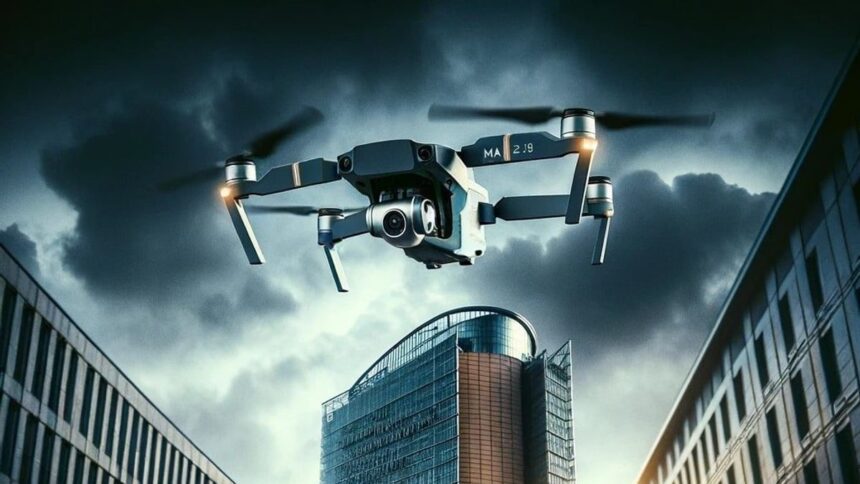
Imagine walking through the heart of Brussels, where the grandeur of European Union institutions casts long shadows over the bustling streets. Here, at the Berlaymont building, the nerve center of the European Commission, a new kind of vigilance is taking shape. Amid growing concerns over espionage and unauthorized surveillance, the Commission is spearheading an initiative to fortify its headquarters with sophisticated anti-drone technology. This move underscores a broader effort to safeguard the sanctity of European governance from the modern perils of unmanned aerial intrusion.
Shielding the Skies: A Proactive Stance Against Unseen Threats
The European Commission’s decision to explore the integration of anti-drone measures at its Berlaymont headquarters is more than a security upgrade; it’s a statement. In an era where the invisible buzzing of drones overhead can signify espionage or worse, the Commission is not taking any chances. Details of the discussions with potential suppliers remain under wraps, a reflection of the sensitivity surrounding the security of Europe’s political heart. Yet, the initiative is a clear indication of the EU’s resolve to counteract the espionage and physical threats facilitated by drones, which have become all too common in Brussels, a city notorious as a hotbed for international spying.
While the specifics of the technology being considered are confidential, industry insiders hint at the deployment of surveillance cameras and electronic jamming devices designed to neutralize unauthorized drones. This approach not only addresses the immediate threats but also serves as a deterrent, sending a strong message to would-be perpetrators about the EU’s commitment to safeguarding its institutions.
Regulating the Airspace: Beyond Anti-Drone Measures
The European Commission’s efforts to secure its headquarters do not exist in isolation. Across Brussels, existing strategies and regulations aim to manage drone activity in the city’s airspace effectively. The Commission has been at the forefront of issuing guidelines and introducing regulations that strike a balance between ensuring security and fostering innovation in drone technology. This regulatory landscape reflects an acknowledgment of the dual nature of drones—as tools for both potential threat and societal benefit.
Moreover, the broader implications of drone technology on international security are not lost on the EU. With the bloc set to adopt a 13th set of sanctions against Moscow, targeting individuals and entities linked to drone manufacturing for Vladimir Putin’s regime, the issue of drone misuse is firmly on the EU’s radar. The sanctions, part of a concerted effort to tighten enforcement against Moscow, underscore the EU’s commitment to addressing security threats at their source.
A Collective Endeavor: EU Institutions and Member States Unite
While the European Commission leads the charge in implementing anti-drone technology at its headquarters, it is not alone in recognizing the importance of addressing security threats. Other EU institutions, though not explicitly committing to similar measures, are cognizant of the risks posed by unauthorized drone activity. The collective endeavor extends beyond the confines of Brussels, with member states also playing a crucial role in shaping a cohesive EU strategy against drone threats.
The collaboration with stakeholders and Belgian authorities highlights a unified approach to security, one that transcends individual institutions and borders. As the EU navigates the complexities of modern security challenges, the adoption of anti-drone measures at the Berlaymont building is but one piece of a larger puzzle—a testament to the EU’s resolve to protect its democratic institutions and the values they embody.