Summary
- General Atomics XQ-67A and Anduril selected for new Collaborate Combat Aircraft program worth billions
- Drones complement future sixth-generation manned fighters to enhance capabilities and survivability
- Program aims to deliver 1,000 CCA drones to ensure cost-effective scalability and military dominance
Alongside next-generation NGAD fighters, the United States is developing drones or UAVs like the General Atomics XQ-67A to complement the system. Sixth-generation fighters are set to be central manned platforms accompanied by drones as part of the Collaborate Combat Aircraft program (broadly similar to the ‘loyal wingmen’ concept). The Air Force has now selected Anduril and General Atomics to build the new Collaborate Combat Aircraft. At a time when the Russians and Ukrainians seemingly look backward to fight their trench warfare, great powers like the United States are developing cutting-edge technology to fight the war of the future.
General Atomics XQ-67A selected for CCA
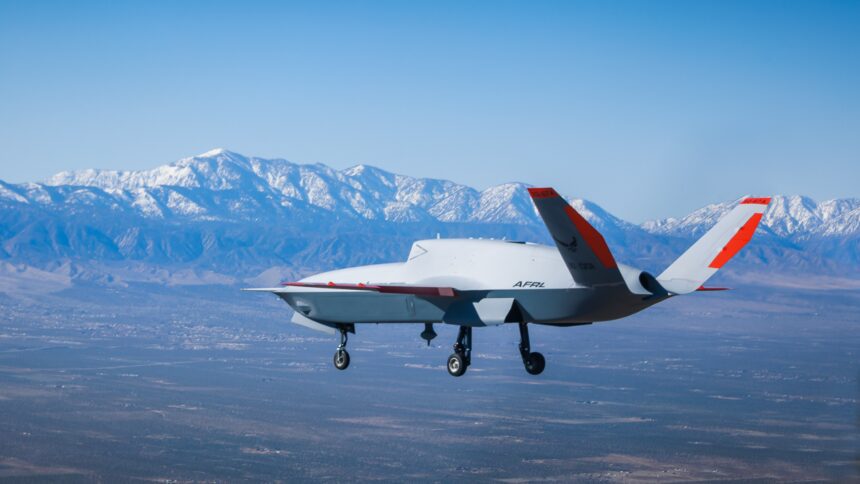
According to The Warzone, General Atomics has now confirmed the experimental XQ-67A drone is serving as a prototype for the Collaborative Combat Aircraft design. The publication reported that the Air Force had chosen General Atomics to move ahead in the first phase of the CCA program (called Increment 1). It is expected that eventually, hundreds or thousands of drones will be built as part of the CCA program worth billions of dollars.

Photo: General Atomics
This means that General Atomics, with its XQ-67 drone, along with Anduril, with its Fury drone, can now move forward with Increment 1. Previously, Boeing, Lockheed Martin, and Northrop Grumman received initial Increment 1 contracts, but these have been cut. Those companies not selected can still be part of the broader industry partner vendor pool and compete for future contracts.

How Far Can A Shahed-149 Drone Fly? A Closer Look At Iran’s Unmanned Aerial Vehicles
A quick look at growing Iranian drone capabilities.
Drones to fight the war of the future
“General Atomics has already done significant testing using its stealthy Avenger drones to demonstrate potential air-to-air combat capabilities, including using podded IRST systems. Some of these test events have been complex and have demonstrated autonomy and artificial intelligence-enabled capabilities that are relevant to its CCA work.” –
The Warzone
The CCA program applies to not only the sixth-generation fighters but also America’s new Northrop Grumman B-21 Raider, which is now entering low-rate production. The General Atomics XQ-67A is intended to fly ahead of and pass data back to manned aircraft. They will enhance the effectiveness of the manned aircraft (with the manned aircraft almost acting like a command center). The future of air warfare will likely see a mixture of manned and unmanned aircraft working together to project power in an increased threat environment.
The drones will be able to paint a picture with their advanced sensors, shoot, carry weapons, and perform other roles. Defense One reported that US Air Force Secretary Frank Kendall has described them as playing perhaps “100 roles.” The full range of the XQ-67A’s intended capabilities is not yet known—for example, it is not certain yet if it is capable of carrying weapons.
A couple of days ago, the General Atomics XQ-67A was announced as part of the next-generation Collaborative Combat Aircraft (CCA) program. Last night, Militarnyi reported a propeller-driven Ukrainian Yak-52 shooting down basic Russian recon drones over Ukraine in a scene straight out of World War II. The contrast could not be more stark.
The CCA program seems to be moving fast. The first General Atomics XQ-67A prototype was only unveiled recently (on 8 February 2024) and its first flight was on 28 February 2024. Two more successful test flights have been completed since then and are setting the groundwork for building a successful production and flight test program. The General Atomics XQ-67 is far from the only advanced drone in development in the US military. Another long-range combat drone in development is the Kratos XQ-58A Valkyrie which is being developed as part of the Air Force’s Low Cost Attritable Strike Demonstrator (LCASD) program.

Photo: Air Force Material Command

20,000 Drone Pilots & Counting: Tale Of The Drone War
Tens of thousands of remote pilots or drone operators are being trained on both sides of the Ukraine War, transforming the way war is fought.
Collaborative Combat Aircraft (CCA)
“The CCA program is part of the Next Generation Air Dominance Family of Systems, which is a DAF effort to equip the force with crewed and uncrewed platforms that can meet the pacing challenge.” –
Air Force

Photo: Air Force Material Command
Future sixth-generation manned fighters will be extremely expensive and likely to be procured in much lower numbers than legacy aircraft. This makes them extremely valuable, and even losing one can be painful. But while they may be vastly more capable than their predecessors, the expected limited quantity of sixth-generation fighters will be a problem. Adding to that, as the aircraft is so valuable, the Air Force may not want to risk using and losing it, which in turn limits its usefulness.
One way to help resolve this dilemma is to pair the manned sixth-generation fighters with disposable loyal wingman drones. This will lower the need for manned aircraft and be much more affordable. With these drones, the CCA programs offer expanded fighter capacity (affordable mass) with reduced costs and adaptable timelines. The CCA incorporates artificial intelligence (AI) making it more autonomous and survivable on the battlefield.

Photo: Mike Mareen | Shutterstock
The Air Force states it is on track to make a competitive production decision for the first increment of CCA in fiscal year 2026 and have a fully operational capability before 2030. The Air Force also states the CCA program aims to deliver at least 1,000 CCA while prioritizing cost-effective scalability. The plan is to help the United States maintain its military dominance for more than 70 years.