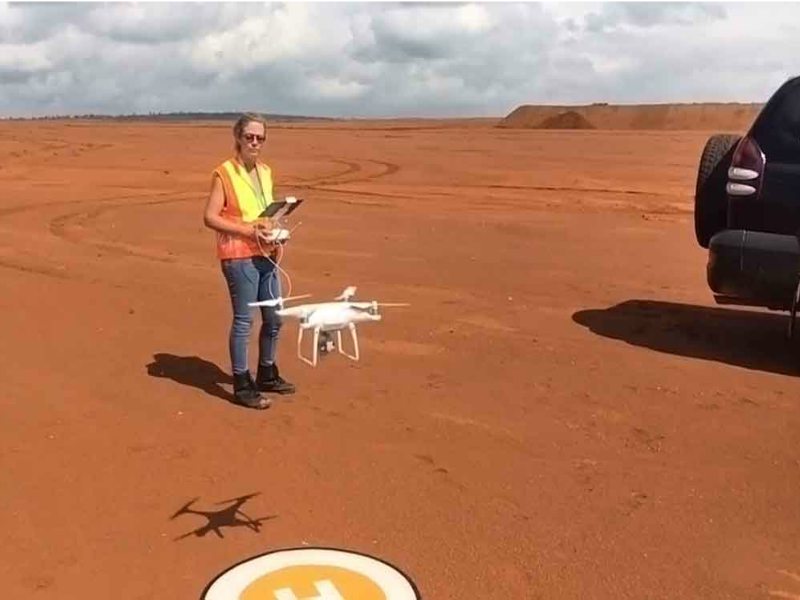
In the vast mining landscape of South Africa, unmanned aerial vehicles (UAVs) are rewriting the rules of exploration and extraction, offering a bird’s-eye view of the sector’s evolution from reducing the risk of perilous labour to introducing high-tech precision.
Across the scope of South Africa’s mining environment, both mine dumps and deep-level operations, a new protagonist has emerged in the saga of its storied mining sector. Unmanned aerial vehicles (UAVs), more commonly known as drones, are soaring into the narrative, shifting the paradigm of how mining operations unfold across this resource-rich landscape.
Early adoption and technological growth
At the turn of the century, the mining industry began flirting with the potential of UAV technology. This courtship was marked by a mix of wonder and wariness, with initial forays into drone usage being sporadic and hampered by the limitations of early technology. Yet, these maiden flights heralded the start of an epochal shift, presaging the transformation of drones from luxury playthings to indispensable tools across mining operations, including security, surveillance, and land rehabilitation.
With technological evolution, UAVs have ascended beyond their early reconnaissance roles. Now equipped with advanced sensors and imaging capabilities like LIDAR, thermal, and infrared cameras, drones have peeled back the earthen veil to reveal riches and risks alike, revolutionising strata assessment, safety inspections, and tunnel mapping.
Regulatory skyways and economic impact
The South African Civil Aviation Authority stepped in early, sculpting a regulatory framework from 2015 onwards to safeguard the ascent of drones. This governance bolstered industry confidence, ensuring the skies are navigated safely and methodically, teeming with the buzz of economic opportunity.
Mining giants such as Kumba Iron Ore have woven drones into their operational fabric, transforming arduous manual tasks into streamlined automated processes. The impact is profound: the mining sector’s US$22 billion contribution to the country’s GDP in 2017 underscores the fiscal weight of this aerial revolution, and the magnetism of this tech renaissance is drawing critical international investment into South Africa’s coffers.
Safety and socioeconomic shifts
The most poignant chapter of this tale, perhaps, is the increased safety which drones afford workers. By taking humans out of harm’s way, UAVs have become silent sentinels over the perilous tapestry of mines, reducing the historically steep human cost of mining.
Yet, drones cast long shadows of socio-economic uncertainty. In a nation grappling with unemployment rates around 25%, drones present a dichotomy of hope and concern. While promising safer conditions and new skilled jobs, they also threaten the traditional roles of many workers, signaling a march toward an automated future that could displace unskilled labor.
A future forged by innovation
Organisations like Exxaro Resources Group, in partnership with Rocketmine, are testaments to the multifaceted utility of drones, from geological surveys to inventory assessments. As this technology continues to pierce the horizon of possibilities, the mining narrative is being rewritten. Yet the story is laced with questions about the broader repercussions on employment and poverty, with the sector navigating a delicate balance between progress and the potential social upheaval.
The confluence of ground robotics and UAVs, championed by companies like Dwyka Mining Services, marks another leap forward, melding safety with data precision in uncharted subterranean ventures. Contrary to the narrative of job loss, the drone industry is poised to create new career paths, with projections suggesting 30 000 jobs annually—a beacon of hope in a landscape marred by job scarcity.
Harmony in progress
The integration of UAVs is an ongoing symphony of progress and challenge, as South Africa’s mining industry grapples with the dualities of modernisation. While the drones promise a surge in safety and operational efficiency, their broader societal implications stir a pot of debate. The ultimate measure of success in this aerial advance will be the industry’s ability to strike a chord between economic vitality and social welfare, ensuring a future where technology uplifts rather than displaces.
In the grand tableau of South African mining, drones are more than mere actors; they are reshaping the very fabric of the industry. As the story unfolds, the nation watches with bated breath, hopeful that this technological tide will lift all boats, bringing prosperity and safety to a land built on the wealth beneath its feet.