By Sean Bell, military analyst
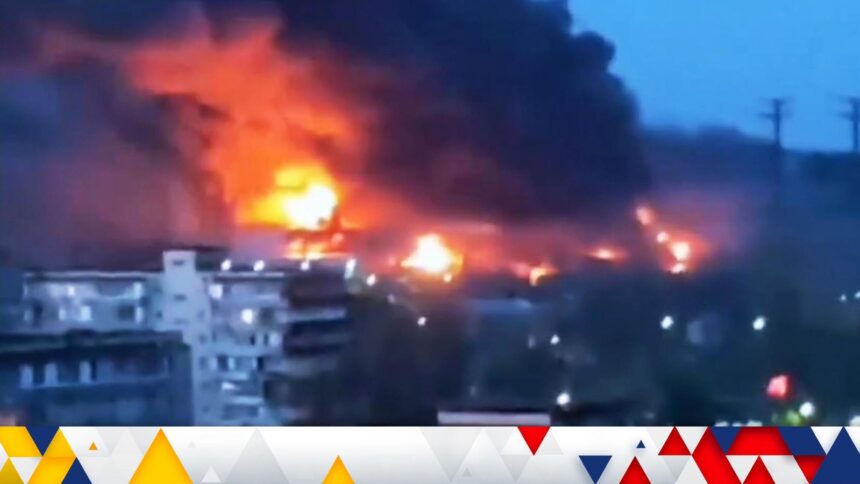
Overnight, Russia launched what it described as a “massive strike” against Ukrainian energy infrastructure.
Ukraine claims the attack involved at least 82 drones and missiles, launched from nine Russian strategic bombers.
The thermal power plant in Kyiv was destroyed in the attack, which the Russian defence ministry claimed would impact the Ukrainian military industrial enterprise.
President Zelenskyy reiterated his appeal to the West to increase supplies of weapons and ammunition – particularly air defence missiles – to enable Ukraine to resist the latest Russian onslaught.
President Putin is evidently ratcheting up military pressure on Ukraine as dwindling supplies of weapons make Ukraine more vulnerable.
Politically, the West appears committed to supporting Ukraine’s military campaign, but translating rhetoric into a steady supply of weapons and ammunition is proving difficult.
Western war-stocks of weapons have been depleted significantly, and only the US has sufficient supplies of weapons to meet Ukraine’s near-term needs.
However, with a $60bn military aid package yet to be approved by Congress, and with little sign that the gridlock will be eased anytime soon, the coming weeks look increasingly difficult for Ukraine.
President Putin is clearly exploiting this window of Ukrainian military vulnerability, in the hope that Russian forces – that overmatch Ukrainians 10:1 in some parts of the frontline – can achieve a decisive breakthrough in the coming weeks.
If Russia prevails, an emboldened Putin might well start to set his sights further afield.
The West retains options – such as boots on the ground and imposing a no-fly-zone – but to date Russian threats appear to have succeeded in neutering Western political resolve.
But for how much longer?