Good morning and welcome to our overview of the war between Russia and Ukraine as it rolls into another week.
US House passes major aid bill
The big news of the week came from Washington, where a massive aid deal for Ukraine edged closer to being signed into law after months of hold-ups.
In a major win for Ukraine, the $60.8bn (£49bn) bill was passed by the Republican-controlled House of Representatives – which had been the source of the delay.
Republicans aligned with former president Donald Trump had been blocking the bill, but a cross-party effort managed to break months of deadline on Saturday.
The package will go to the US Senate, where it is likely to be passed tomorrow and will then immediately be passed into law by Joe Biden.
Volodymyr Zelenskyy said he was “grateful” for the decision – having spent months trying to persuade American politicians to send more weapons to Ukraine.
The situation on the ground
And here’s why that aid bill is so important to Ukraine.
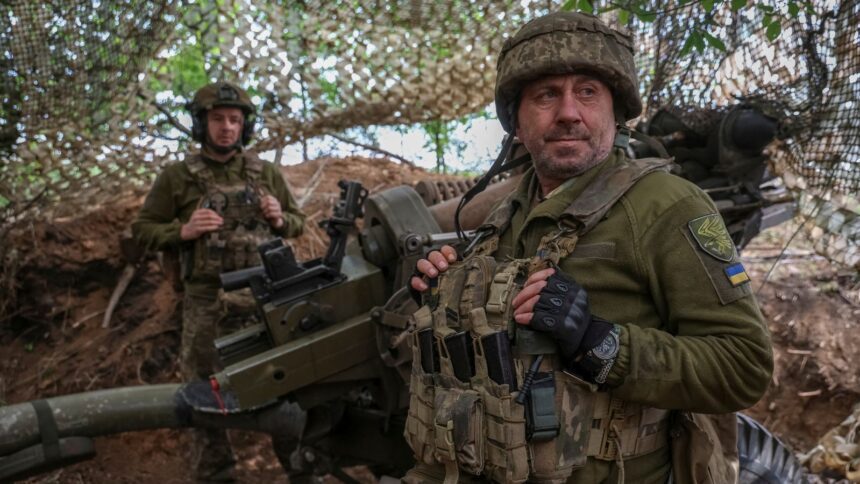
Russian forces have had an advantage in recent weeks, boasting both more men and more weapons.
Since Moscow took the eastern Ukrainian town of Avdiivka on 17 February, they have been inching forward and swallowing up villages.
They have made more marginal gains west of Avdiivka and Bakhmut, and now appear to be aiming for the small town of Chasiv Yar.
Ukraine’s commander-in-chief Oleksandr Syrskyii said Moscow wants to capture it by 9 May, which is Russia’s Victory Day holiday.
Yesterday, Russia said its forces had gained territory near the key battleground town.
Military analysts believe if Chasiv Yar fell, it would open up Ukraine to attacks on the towns of Kostiantynivka, Druzhkivka, Kramatorsk and Sloviansk in western Donetsk.
‘We have a chance to take the initiative’
So will the US aid bill make a difference?
Volodymyr Zelenskyy seemed to think so – but he warned it would depend on how quickly weapons are sent to Ukraine.
“Now we have the chance to stabilise the situation and to overtake the initiative, and that’s why we need to actually have the weapons systems,” the Ukrainian president told our partner network yesterday.
He said Ukraine had suffered significant losses in personnel and equipment due to the delay already, and warned that if weapons took another six months to arrive then the situation could deteriorate further.
NATO to send more air defences to Ukraine
Ukraine’s desperate pleas for more air defences appear to have got through to NATO, which has said it will make announcements on the matter in the near future.
An emergency meeting between Mr Zelenskyy and NATO defence ministers was held on Friday as Russia’s attacks on civilians escalated.
NATO secretary-general Jens Stoltenberg said after the meeting that defence ministers had “agreed to step up and provide further military support, including more air defence”.
Kyiv had been making ever more anguished calls for help with air defences due to a series of deadly Russian strikes.
On Wednesday, a mid-morning attack on the city of Chernihiv killed 18 people and left another 78 injured.
And on Friday, at least eight people were killed in the central
Dnipropetrovsk region.
Nuclear plant attacked
On Tuesday, the chief of the UN’s nuclear watchdog said three attacks on the Zaporizhzhia nuclear power plant had been confirmed since 7 April.
Rafael Grossi added the trio of attacks “have been performed with a multitude of drones”, adding it was impossible to confirm who launched them.
Ukraine and Russia have blamed each other for attacks on the site.
Spy scandals continue
Away from Ukraine itself, spy scandals involving Russia continue to rock the wider European continent.
On Thursday, Germany arrested two men for allegedly spying for Russia, with one planning to carry out attacks in the hopes of sabotaging aid intended for Ukraine.
It comes after the head of NATO said the alliance had expelled Russian nationals who were gathering intelligence.
On the same day, a Polish man was arrested on allegations of being ready to help Russia’s military intelligence in an alleged plot to assassinate Ukraine’s President Volodymyr Zelenskyy.