RESISTANCE AXIS
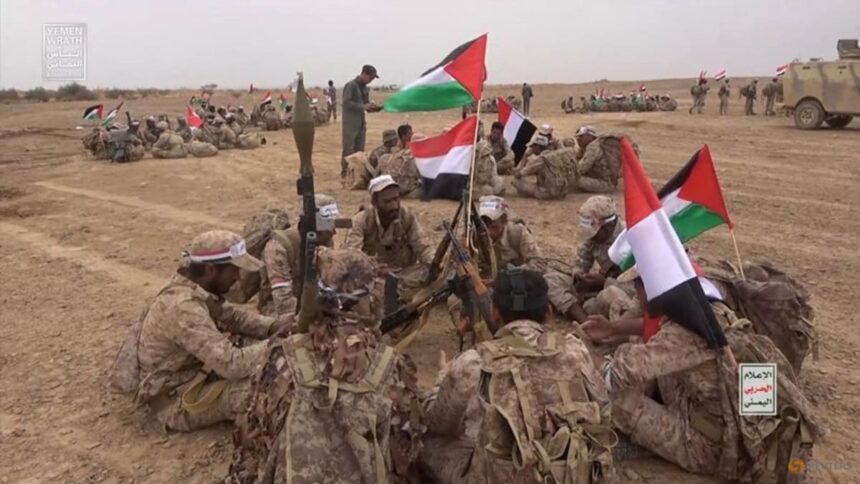
The Houthis are a formidable part of the “Axis of Resistance”, which opposes Israel and the United States and has been waging attacks across the region since Oct 7.
Iran-backed Iraqi militias have been firing at US forces in Iraq and Syria, while Lebanon’s Hezbollah has been exchanging fire with Israeli forces at the Lebanese-Israeli border.
The Houthis have demonstrated their missile and drone capabilities during the Yemen war in attacks on Saudi Arabia and the United Arab Emirates. The Saudi-led coalition accuses Iran of arming, training and funding the Houthis. The group denies being an Iranian proxy and says its develops its own weapons.
The United States, Israel’s main ally, has deployed aircraft carriers as a deterrent to prevent the Gaza conflict spreading. Iran has also said it does not want the war to spread.
But Iranian Foreign Minister Hossein Amirabdollahian on Tuesday indicated Tehran’s allies could act further.
“Resistance groups will not remain silent in the face of the Zionist regime’s crimes and America’s full support for the Zionist regime,” he said. “They won’t wait for anyone’s advice; if the situation gets out of control, no party will be safe from its consequences,” he said at a meeting with the Emir of Qatar, Iranian state media reported.
Houthi spokesperson Saree blamed Israel for instability in the Middle East, saying the “circle of conflict” in the region was being expanded by its “continued crimes”. The Houthis would continue to mount attacks “until the Israeli aggression stops”.
Noting that Houthi missiles and drones had been shot down during the latest hostilities, Mohanad Hage Ali of the Carnegie Middle East Center said for now their attacks were “more about messaging than a real military threat”.
“The risk to Israel would be if there is an all-out engagement, with multiple rocket launches from all directions which could overwhelm the air defences,” he said.